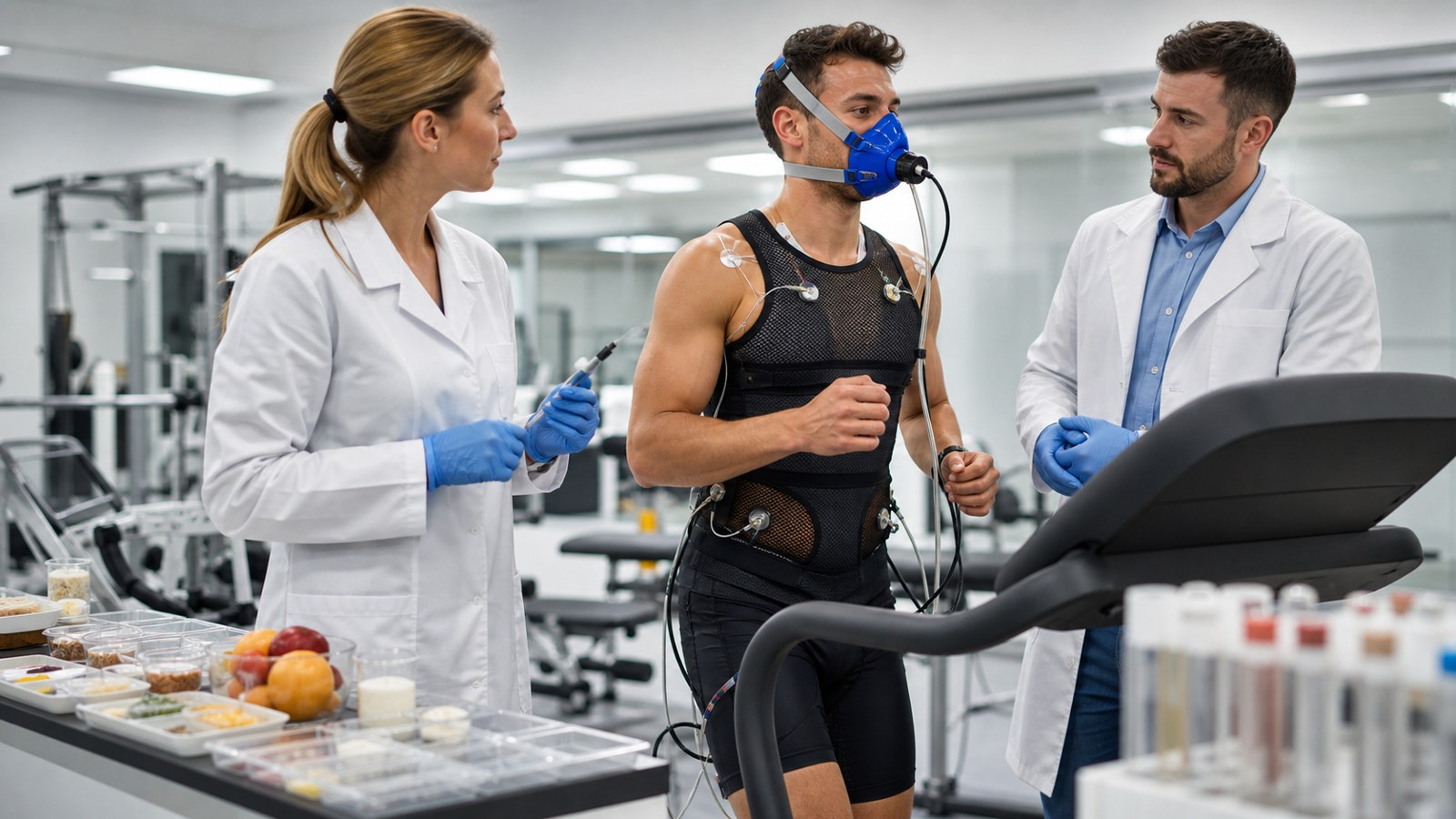
AI Could Help People Understand Metabolism Through Wearables, Nutrition Data, Sleep Patterns, Hormones, and Personalized Health Feedback
AI and the future of metabolism is about using data to understand how the body uses energy, responds to food, manages weight, repairs tissue, and adapts to stress. Metabolism is not a simple speed setting. It involves hormones, muscle mass, sleep, genetics, gut health, activity, age, medication, and environment. AI may help connect those signals, but it must be used carefully because health advice can become misleading when models overpromise.
A: No. Treat it as a possibility to evaluate, not a fixed destiny.
A: Look for real-world adoption, independent testing, and clear limits.
A: No. Speed helps only when safety, access, and accountability keep pace.
A: Workers, users, communities, public institutions, and people with the least power to opt out.
A: Evidence, transparent methods, repeatable results, and honest discussion of failure.
A: It can, but good rules can also build trust and prevent harmful shortcuts.
A: Benefits that reach only wealthy users can widen inequality instead of reducing it.
A: Confusing impressive demonstrations with durable, governed systems.
A: Ask what works now, what remains uncertain, and who carries the risk.
A: Whether the idea expands human agency without hiding cost, harm, or responsibility.
Metabolism Is More Than Calories
Calories matter, but metabolism is not only a math problem. The body changes energy use based on movement, body composition, illness, hormones, sleep, temperature, and long-term habits. AI tools can help people see patterns that are hard to notice alone. A model might connect late sleep, higher stress, reduced activity, and appetite changes in a way a simple diet log would miss.
A useful way to read AI and metabolism is to separate capability from deployment. A tool can work in a demonstration and still be difficult to govern, explain, secure, or trust at public scale. That distinction keeps the article grounded. The question is not only whether the technology can do something impressive, but whether people can use it responsibly when incentives, cost, failure, and accountability enter the picture.
Wearables Create New Signals
Smart watches, rings, continuous glucose monitors, scales, sleep trackers, and fitness apps can produce streams of health data. AI can organize those signals into trends instead of isolated numbers. The danger is false certainty. A wearable can estimate sleep or activity, but it does not fully understand a person’s body. Good tools should explain uncertainty and encourage medical follow-up when patterns look concerning.
This part of the discussion also needs everyday stakes. Singularity topics often sound abstract, yet the consequences show up in jobs, schools, hospitals, courts, streets, homes, and ordinary decisions. Readers need a bridge between technical possibility and lived reality. The strongest explanation names both the promise and the friction without pretending that either side tells the whole story.
Nutrition Could Become More Personal
People respond differently to the same meal. Glucose response, fullness, digestion, energy, and cravings can vary by sleep, stress, microbiome, activity, and prior meals. AI may help personalize meal timing, protein targets, hydration, fiber, and training recovery. That does not mean every meal needs optimization. Practical advice has to fit budget, culture, taste, and real life.
For AI and metabolism, timing matters because adoption is uneven. Breakthroughs may arrive quickly in controlled environments while public trust, regulation, cost, training, and infrastructure move more slowly. That uneven pace is why careful analysis beats prediction theatre. A useful article helps the reader watch evidence, incentives, and safeguards instead of chasing a single dramatic forecast.
Metabolic Health Needs Medical Boundaries
AI can support prevention by spotting risk patterns, but it should not replace clinicians for diabetes, thyroid disease, eating disorders, heart risk, medication changes, or unexplained weight shifts. The safest systems know when to stop giving lifestyle suggestions and tell the user to seek professional care. A confident answer can be dangerous if the problem is medical.
The deeper test is whether AI and metabolism expands human agency or quietly narrows it. Technology can give people new choices, but it can also concentrate power, hide decisions, or make refusal difficult. Good governance starts before the system becomes unavoidable. Transparency, appeal rights, independent testing, security review, and plain-language explanation all matter when advanced systems touch real lives.
Optimization Can Become Unhealthy
Metabolic tracking can help some people feel informed, but it can also feed anxiety, obsession, or shame. More data does not always mean more health. A useful AI coach should support sustainable habits: regular meals, enough protein, strength training, sleep, walking, stress management, and realistic goals. It should not turn every body signal into a crisis.
Ai And Metabolism should be judged by results that survive contact with messy reality. Reliability, maintenance, safety, bias, misuse, privacy, cost, and repair all become more important after the launch announcement fades. That practical standard keeps the article useful for beginners. It invites curiosity without turning uncertainty into either panic or advertising.
The Best Future Is Supportive, Not Controlling
AI could make metabolic health easier by translating complex data into small decisions: when to rest, when to eat, how to adjust training, or when a trend deserves attention. The best systems will help people understand their bodies without treating the body like a machine that must be constantly tuned. Health is lived, not merely optimized.
A mature view of AI and metabolism leaves room for disagreement. Reasonable people can support research, demand stronger oversight, worry about concentration of power, and still recognize genuine benefits. The useful conclusion is not a simple yes or no. It is a clearer set of questions to ask as the technology moves from labs and pilots into ordinary institutions.
How to Think About Ai And Metabolism in Real Life
The practical test for AI and metabolism is whether a reader can name the real decision at stake. Is the issue safety, identity, work, access, privacy, public trust, technical reliability, or the balance of power between people and institutions? Start with the actual users and affected communities. A system that feels convenient to managers, developers, or investors may feel opaque or coercive to the people being measured, guided, replaced, or denied service.
Look for evidence that travels beyond a polished demo. Field performance, independent audits, long-term follow-up, documented failures, appeal channels, and maintenance records say more than a launch video. Ask who can challenge the system. Advanced technology becomes more trustworthy when people know how decisions are made, how errors are corrected, and who is responsible when harm occurs.
Follow the money and the incentives. Cost savings, data access, labor pressure, political advantage, market control, and public-service goals can all push the same technology in different directions. Watch for hidden dependencies. Many futuristic systems rely on ordinary infrastructure: power, networks, sensors, human supervisors, supply chains, insurance, permits, training, and repair crews. A strong explanation of AI and metabolism should make the reader more thoughtful rather than more dazzled. The goal is to understand what is changing, what is still uncertain, and what safeguards would make adoption more legitimate.
The best questions are plain ones. Who benefits, who is exposed to risk, who can opt out, who pays, who verifies claims, and what happens when the system fails?
Evidence Checklist for Ai And Metabolism
Before trusting a claim about AI and metabolism, ask what the system actually does today. A narrow pilot, a laboratory result, a simulated benchmark, and a public service used by millions are very different kinds of evidence. Check whether the claim depends on perfect conditions. Many advanced systems look stronger when the environment is controlled, the user is cooperative, the task is narrow, and the failure cases are filtered out.
Look for independent review. Vendor reports, company demos, and optimistic forecasts are useful starting points, but outside audits, public incident reports, peer review, and real deployment records carry more weight. Ask what happens to people who are already vulnerable. New technology often reaches people unevenly, and the first harms may appear among workers, patients, students, disabled users, low-income households, or communities with less political power.
Notice whether the system creates a meaningful appeal path. If a person cannot correct an error, reach a human, or understand why something happened, the technology may be efficient without being fair. Treat AI and metabolism as a social system, not only a technical system. Laws, budgets, training, incentives, labor rules, safety culture, and public expectations determine whether the technology becomes useful or harmful.
Separate short-term usefulness from long-term dependence. A tool can save time today while creating vendor lock-in, skill loss, surveillance habits, or infrastructure costs that are harder to unwind later. Finally, ask what would count as failure. Clear failure standards make the topic easier to govern because people know when to pause, redesign, compensate, or remove a system that is not serving the public well.
Common Mistakes When Reading About Ai And Metabolism
One common mistake is treating AI and metabolism as inevitable. Technology spreads through choices made by companies, governments, investors, workers, courts, customers, and communities. Another mistake is assuming that technical progress automatically creates social progress. A system can become more capable while also becoming more intrusive, unequal, brittle, or difficult to contest. A third mistake is judging the future by the most dramatic example. The headline case may not represent ordinary use, and ordinary use is where most long-term consequences appear.
People also underestimate maintenance. Advanced systems need updates, audits, cybersecurity, user training, incident response, documentation, and budget support after the initial launch. Another risk is vague language. Words like intelligent, autonomous, safe, enhanced, aligned, and revolutionary can hide more than they explain unless the article defines what those words mean in practice. The best way to avoid these mistakes is to keep AI and metabolism connected to evidence and human outcomes. Progress should be measured by what changes for real people, not by how futuristic the description sounds.
Signals to Watch Next for Ai And Metabolism
The first signal to watch is whether AI and metabolism moves from impressive examples to repeatable service. Repeatability means the system works across ordinary users, imperfect data, budget pressure, and unexpected edge cases. The second signal is whether oversight becomes more specific over time. Broad promises about ethics are weaker than concrete rules for testing, disclosure, privacy, security, appeals, and shutdown authority.
The third signal is whether access expands or narrows. A future technology can look successful in wealthy settings while leaving smaller communities, public institutions, or vulnerable users behind. The fourth signal is whether failures are reported honestly. Mature fields build incident records, study near misses, and learn from breakdowns instead of treating every failure as a public-relations problem.
The fifth signal is whether people keep meaningful choices. If adoption requires surrendering privacy, accepting opaque decisions, or depending on one provider, the social cost may be higher than the convenience suggests. Taken together, those signals make AI and metabolism easier to judge. They move the conversation away from awe and toward durability, public value, and human control.
Bottom Line on AI and Metabolism
The final test for AI and metabolism is whether the article leaves readers with usable judgment. They should understand the core technology, the near-term uses, the limits, the social stakes, and the evidence that would change the debate. That kind of judgment matters because singularity topics are easy to exaggerate. A careful reader can be excited by progress while still asking for proof, governance, and human-centered design.
The future will not arrive as one clean event. It will arrive through products, policies, lawsuits, failures, habits, infrastructure, and small decisions that gradually make new behavior feel normal. That is why the best approach is steady rather than breathless. Watch the tools, watch the institutions around them, and watch whether ordinary people gain more control over their lives or less.
When AI and metabolism is framed that way, the subject becomes easier to discuss without hype. It becomes a question of design, accountability, access, and human purpose. AI could improve metabolic health by connecting nutrition, sleep, movement, stress, and medical data in more personal ways. The value will come from careful guidance, honest uncertainty, privacy protection, and respect for the person behind the data.
What to Watch Next for Ai And Metabolism
The next stage for AI and metabolism will be easier to judge by looking at adoption in ordinary settings rather than only at dramatic announcements. Useful change shows up when people can rely on a tool, understand its limits, and recover when something goes wrong. It is also worth watching who gets access first. If the benefits reach only wealthy customers, large companies, or specialized institutions, the social meaning is very different from a tool that becomes broadly useful and accountable.
The strongest signal is practical trust. A future technology matters when it improves real choices, protects people from avoidable harm, and remains understandable enough that users can question it.
Questions That Make Ai And Metabolism Easier to Judge
The most useful final review of AI and metabolism asks whether the promise is specific, whether the limits are visible, and whether the people affected by the technology have real power to question it. A topic can be exciting and still need careful rules before it becomes normal. Readers should also ask who maintains the system after launch, who pays when it fails, who can inspect the results, and who benefits if adoption speeds up. Those questions keep the discussion connected to ordinary life instead of drifting into vague predictions.
That practical framing does not make the future smaller. It makes the future easier to evaluate because progress is measured by reliability, fairness, access, safety, and human agency rather than by novelty alone.