
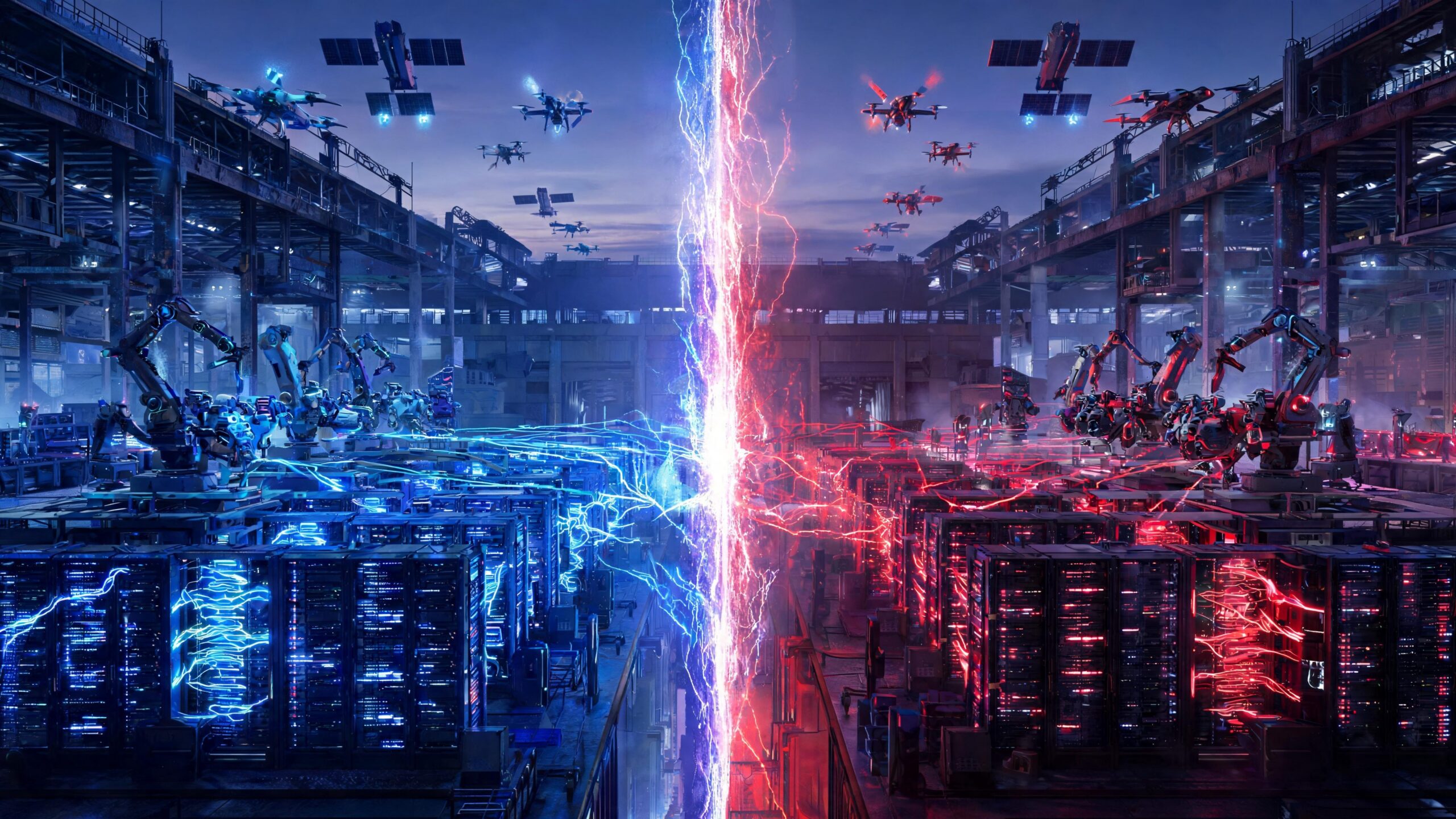
AI-Triggered Arms Races explores one of the most urgent and electrifying questions of the modern technological age: what happens when artificial intelligence becomes a competitive weapon? As nations, corporations, defense labs, and autonomous systems race to build faster, smarter, and more powerful AI, the pressure to move first can outpace caution, oversight, and global coordination. This category examines the thrilling and dangerous momentum behind machine-speed competition, where breakthroughs in automation, cyber strategy, surveillance, robotics, decision systems, and synthetic intelligence can reshape power faster than society can fully understand. At Singularity Streets, this topic opens a gateway into the future of strategic rivalry. These articles explore AI escalation risks, autonomous weapons, military decision loops, corporate model races, geopolitical pressure, cyber defense, deterrence theory, and the uneasy possibility that intelligent systems could intensify conflict without direct human intent. Whether you are fascinated by futurism, global security, machine autonomy, or the ethics of advanced technology, AI-Triggered Arms Races reveals a world where innovation and instability accelerate side by side.
A: It is a competitive rush to develop or deploy powerful AI systems before rivals do.
A: They can encourage speed, secrecy, and deployment before safety is fully understood.
A: No, they can involve corporations, cyber systems, robotics, surveillance, and frontier AI labs.
A: Automation can accelerate decisions and reduce the time humans have to intervene.
A: Yes, especially if systems misinterpret signals or respond too quickly.
A: Systems that can select or engage targets with limited human involvement.
A: It may help, especially when paired with verification, transparency, and international cooperation.
A: Hidden capabilities can make rivals fearful and more likely to escalate.
A: A situation where automated systems intensify conflict faster than humans can manage.
A: Strong oversight, human control, global norms, and careful testing before deployment.