
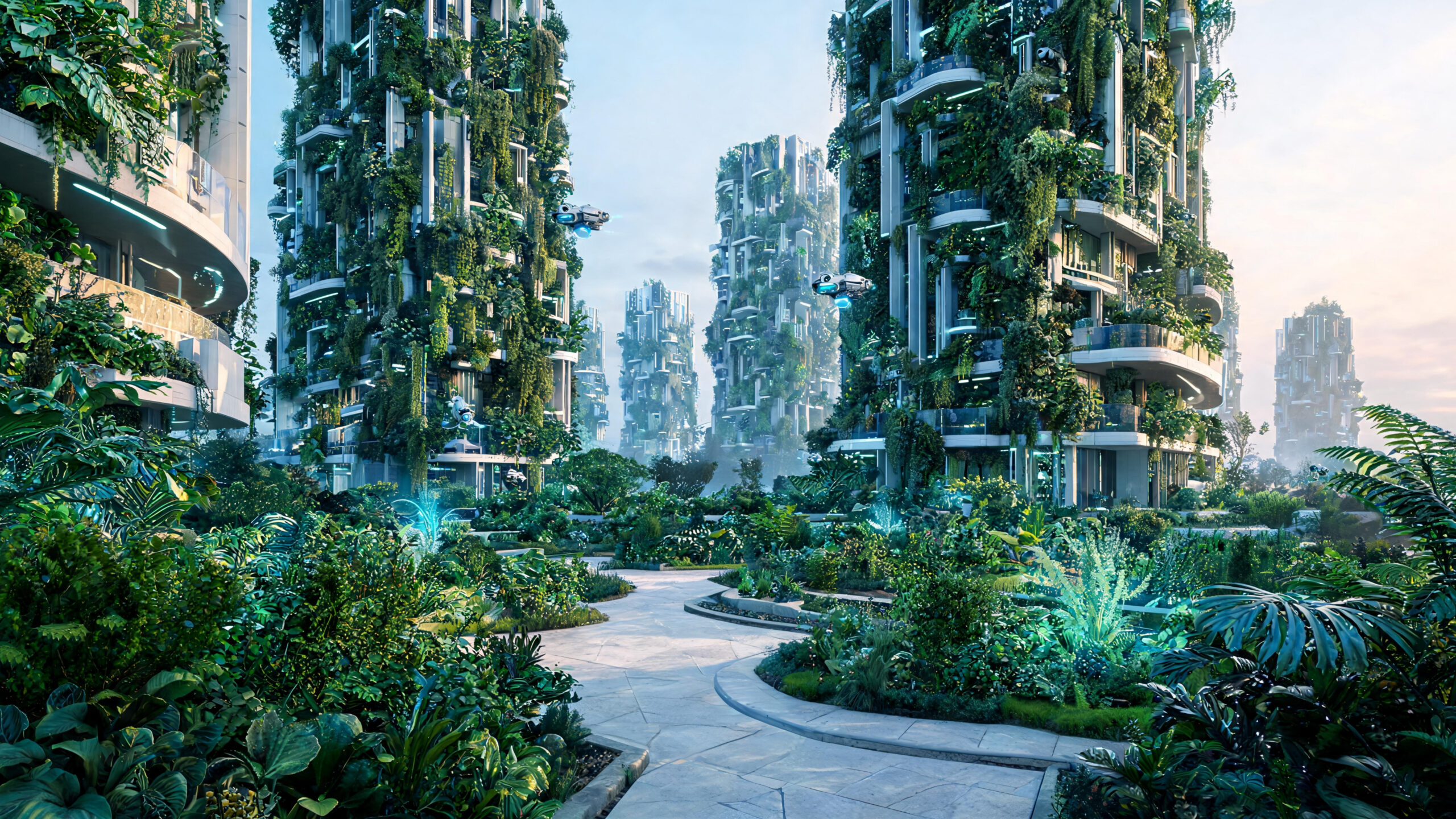
Post-Singularity Ecologies explores what might happen when intelligence, nature, machines, cities, climate systems, and synthetic life begin evolving together at speeds beyond human control. This is the strange frontier where forests may be monitored by self-improving networks, oceans may interact with autonomous restoration systems, and digital organisms could become part of tomorrow’s environmental balance. On Singularity Streets, this category opens the door to articles about engineered ecosystems, AI-managed habitats, robotic pollinators, synthetic biology, climate repair, machine-nature partnerships, and the wild possibility that life after the Singularity may not look purely biological anymore. These futures are thrilling, unsettling, and packed with big questions. Will superintelligent systems protect the planet, redesign it, or create entirely new living environments? Could cities behave like organisms? Could data become an ecological force? Post-Singularity Ecologies invites readers into a world where evolution meets computation, wilderness meets automation, and the next chapter of Earth may be written by humans, machines, and lifeforms we have not yet imagined.
A: They are future ecosystems shaped by advanced AI, robotics, synthetic biology, climate engineering, and intelligent infrastructure.
A: Not fully, but early pieces exist in AI conservation, smart agriculture, bioengineering, robotics, and environmental monitoring.
A: Yes, AI could monitor ecosystems, predict threats, optimize restoration, and guide conservation decisions at large scale.
A: Poorly aligned systems may optimize for the wrong goals, causing ecological harm despite good intentions.
A: Not necessarily, but the meaning of “natural” may change as technology becomes part of living systems.
A: It may create organisms that restore soil, clean water, capture carbon, or support climate resilience.
A: Yes, future cities may integrate food production, water recycling, habitat corridors, and responsive environmental systems.
A: Yes, autonomous machines may act as pollinators, monitors, caretakers, repair systems, or environmental coordinators.
A: It blends both: real emerging technologies with speculative futures about how they might transform the planet.
A: Because the future of intelligence may directly shape the future of Earth’s climate, species, habitats, and survival.