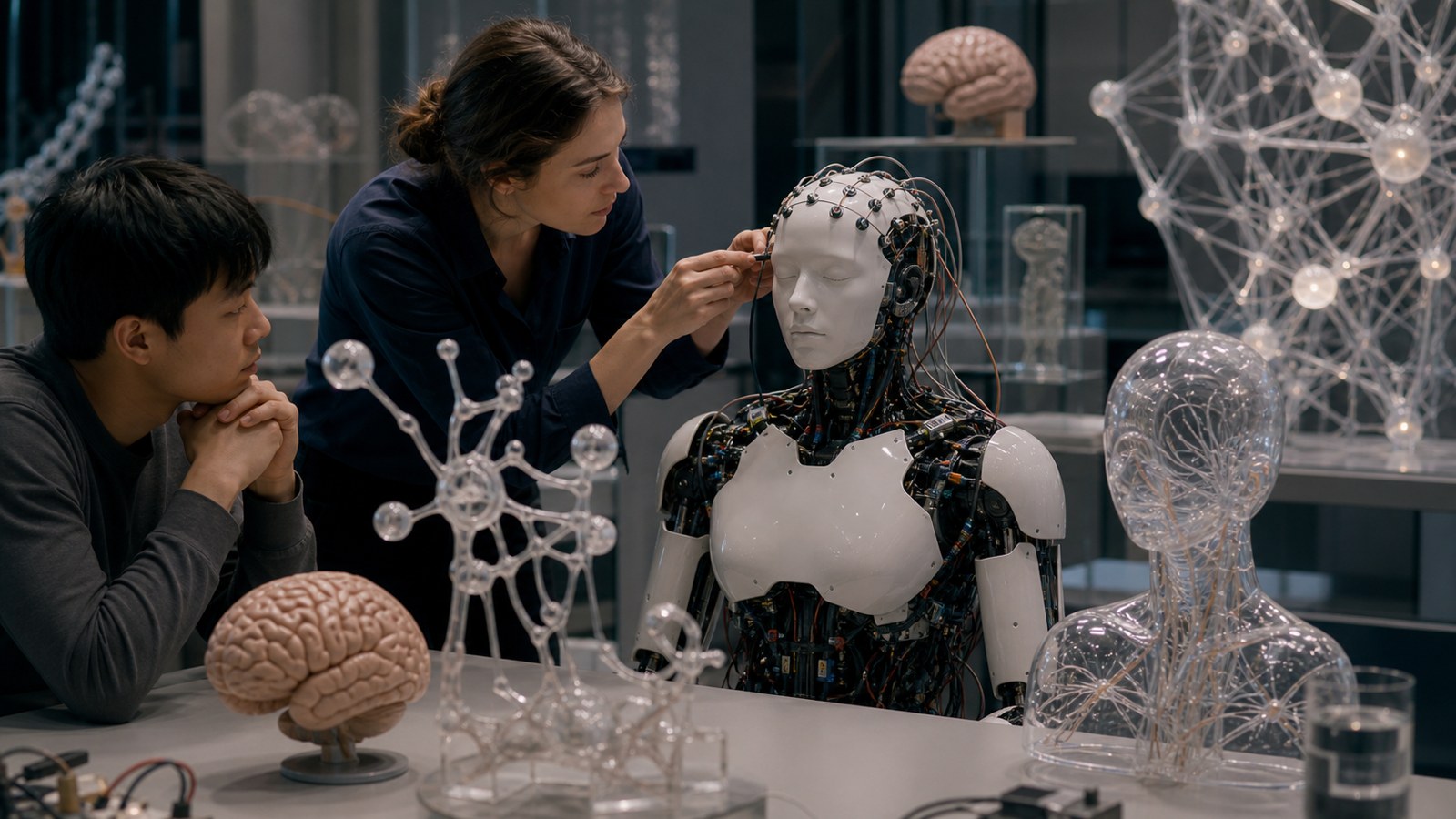
Can AI Become Conscious in Plain English
The easiest way to understand Can AI Become Conscious is to separate the dramatic prediction from the practical trend already unfolding. For readers of Singularity Streets, the point is not to predict one perfect timeline. The point is to understand the forces behind can ai become conscious: what is improving, what remains fragile, and how those changes may touch work, learning, health, identity, and public life. This explainer keeps the language plain while still treating the subject seriously, because the best future literacy comes from clear mental models rather than slogans.
What Can AI Become Conscious Really Means
In practical terms, can ai become conscious is less about a single invention and more about a changing relationship between people, tools, and decisions. The important pattern is that can becomes easier to measure, improve, and combine with other systems. Once that happens, progress can feel gradual for a long time and then suddenly appear to arrive all at once. That is why can should be judged by evidence, not just momentum.
One reason the subject matters is that it changes who can participate. A capability that once required a specialist may become available through better interfaces, safer defaults, or automated support. That does not remove the need for judgment, but it shifts the bottleneck from raw technical skill toward context, responsibility, and taste. This keeps the discussion tied to outcomes people can actually recognize.
The optimistic case is not that technology magically solves every problem. It is that better question gives people more room to prevent mistakes, test ideas, and personalize help. The cautious case is that the same acceleration can amplify confusion if incentives, governance, and education lag behind the tools. The same lens helps separate durable change from short-lived spectacle.
The simple version
A beginner does not need to memorize every technical detail to follow the debate. It is enough to ask what is being improved, who controls the improvement, how failures are discovered, and who benefits first. Those questions keep can ai become conscious grounded in real choices rather than vague futurism. This keeps the discussion tied to outcomes people can actually recognize.
The most realistic forecasts usually combine excitement with friction. Hardware has to be built, data has to be interpreted, people have to trust the results, and institutions have to adapt. That is why systems may advance quickly in one setting while moving slowly in another. The same lens helps separate durable change from short-lived spectacle.
Seen through that lens, can ai become conscious? the biggest question in artificial intelligence is really a story about leverage. Small improvements in sensing, modeling, coordination, or design can ripple through schools, hospitals, workplaces, homes, and public policy. The outcome depends less on novelty alone and more on how wisely the new leverage is used. That balance is what makes the subject useful for nontechnical readers.
There is also a human side that deserves attention. People rarely adopt a future because it is technically impressive; they adopt it when it feels useful, affordable, understandable, and aligned with their values. Any serious conversation about can ai become conscious has to include that slower social layer. That is why question should be judged by evidence, not just momentum.
What is already real
There is also a human side that deserves attention. People rarely adopt a future because it is technically impressive; they adopt it when it feels useful, affordable, understandable, and aligned with their values. Any serious conversation about can ai become conscious has to include that slower social layer. The same lens helps separate durable change from short-lived spectacle.
The next decade will probably bring mixed signals. Some demonstrations will be overhyped, some limits will be underestimated, and some quiet improvements will matter more than the headlines. A good mental model leaves room for surprise without treating every surprise as proof that the whole world has changed overnight. That balance is what makes the subject useful for nontechnical readers.
In practical terms, can ai become conscious is less about a single invention and more about a changing relationship between people, tools, and decisions. The important pattern is that question becomes easier to measure, improve, and combine with other systems. Once that happens, progress can feel gradual for a long time and then suddenly appear to arrive all at once. That is why question should be judged by evidence, not just momentum.
What remains uncertain
One reason the subject matters is that it changes who can participate. A capability that once required a specialist may become available through better interfaces, safer defaults, or automated support. That does not remove the need for judgment, but it shifts the bottleneck from raw technical skill toward context, responsibility, and taste. That balance is what makes the subject useful for nontechnical readers.
The optimistic case is not that technology magically solves every problem. It is that better systems gives people more room to prevent mistakes, test ideas, and personalize help. The cautious case is that the same acceleration can amplify confusion if incentives, governance, and education lag behind the tools. That is why question should be judged by evidence, not just momentum.
A beginner does not need to memorize every technical detail to follow the debate. It is enough to ask what is being improved, who controls the improvement, how failures are discovered, and who benefits first. Those questions keep can ai become conscious grounded in real choices rather than vague futurism. This keeps the discussion tied to outcomes people can actually recognize.
The most realistic forecasts usually combine excitement with friction. Hardware has to be built, data has to be interpreted, people have to trust the results, and institutions have to adapt. That is why biggest may advance quickly in one setting while moving slowly in another. The same lens helps separate durable change from short-lived spectacle.
How it could affect everyday life
The most realistic forecasts usually combine excitement with friction. Hardware has to be built, data has to be interpreted, people have to trust the results, and institutions have to adapt. That is why become may advance quickly in one setting while moving slowly in another. That is why question should be judged by evidence, not just momentum.
Seen through that lens, can ai become conscious? the biggest question in artificial intelligence is really a story about leverage. Small improvements in sensing, modeling, coordination, or design can ripple through schools, hospitals, workplaces, homes, and public policy. The outcome depends less on novelty alone and more on how wisely the new leverage is used. This keeps the discussion tied to outcomes people can actually recognize.
There is also a human side that deserves attention. People rarely adopt a future because it is technically impressive; they adopt it when it feels useful, affordable, understandable, and aligned with their values. Any serious conversation about can ai become conscious has to include that slower social layer. The same lens helps separate durable change from short-lived spectacle.
- Watch for practical pilots before assuming mass adoption.
- Compare benefits with access, safety, and accountability.
- Treat confident timelines as guesses, not guarantees.
The opportunities worth watching
The next decade will probably bring mixed signals. Some demonstrations will be overhyped, some limits will be underestimated, and some quiet improvements will matter more than the headlines. A good mental model leaves room for surprise without treating every surprise as proof that the whole world has changed overnight. This keeps the discussion tied to outcomes people can actually recognize.
In practical terms, can ai become conscious is less about a single invention and more about a changing relationship between people, tools, and decisions. The important pattern is that systems becomes easier to measure, improve, and combine with other systems. Once that happens, progress can feel gradual for a long time and then suddenly appear to arrive all at once. The same lens helps separate durable change from short-lived spectacle.
One reason the subject matters is that it changes who can participate. A capability that once required a specialist may become available through better interfaces, safer defaults, or automated support. That does not remove the need for judgment, but it shifts the bottleneck from raw technical skill toward context, responsibility, and taste. That balance is what makes the subject useful for nontechnical readers.
The optimistic case is not that technology magically solves every problem. It is that better biggest gives people more room to prevent mistakes, test ideas, and personalize help. The cautious case is that the same acceleration can amplify confusion if incentives, governance, and education lag behind the tools. That is why become should be judged by evidence, not just momentum.
The risks beginners should understand
The optimistic case is not that technology magically solves every problem. It is that better become gives people more room to prevent mistakes, test ideas, and personalize help. The cautious case is that the same acceleration can amplify confusion if incentives, governance, and education lag behind the tools. The same lens helps separate durable change from short-lived spectacle.
A beginner does not need to memorize every technical detail to follow the debate. It is enough to ask what is being improved, who controls the improvement, how failures are discovered, and who benefits first. Those questions keep can ai become conscious grounded in real choices rather than vague futurism. That balance is what makes the subject useful for nontechnical readers.
The most realistic forecasts usually combine excitement with friction. Hardware has to be built, data has to be interpreted, people have to trust the results, and institutions have to adapt. That is why self-improving may advance quickly in one setting while moving slowly in another. That is why become should be judged by evidence, not just momentum.
How to think about the next decade
Seen through that lens, can ai become conscious? the biggest question in artificial intelligence is really a story about leverage. Small improvements in sensing, modeling, coordination, or design can ripple through schools, hospitals, workplaces, homes, and public policy. The outcome depends less on novelty alone and more on how wisely the new leverage is used. That balance is what makes the subject useful for nontechnical readers.
There is also a human side that deserves attention. People rarely adopt a future because it is technically impressive; they adopt it when it feels useful, affordable, understandable, and aligned with their values. Any serious conversation about can ai become conscious has to include that slower social layer. That is why become should be judged by evidence, not just momentum.
The next decade will probably bring mixed signals. Some demonstrations will be overhyped, some limits will be underestimated, and some quiet improvements will matter more than the headlines. A good mental model leaves room for surprise without treating every surprise as proof that the whole world has changed overnight. This keeps the discussion tied to outcomes people can actually recognize.
In practical terms, can ai become conscious is less about a single invention and more about a changing relationship between people, tools, and decisions. The important pattern is that biggest becomes easier to measure, improve, and combine with other systems. Once that happens, progress can feel gradual for a long time and then suddenly appear to arrive all at once. The same lens helps separate durable change from short-lived spectacle.
A practical way to keep learning
In practical terms, can ai become conscious is less about a single invention and more about a changing relationship between people, tools, and decisions. The important pattern is that become becomes easier to measure, improve, and combine with other systems. Once that happens, progress can feel gradual for a long time and then suddenly appear to arrive all at once. That is why become should be judged by evidence, not just momentum.
One reason the subject matters is that it changes who can participate. A capability that once required a specialist may become available through better interfaces, safer defaults, or automated support. That does not remove the need for judgment, but it shifts the bottleneck from raw technical skill toward context, responsibility, and taste. This keeps the discussion tied to outcomes people can actually recognize.
The Bottom Line
Can AI Become Conscious is worth watching because it compresses several big questions into one readable doorway: what can technology improve, what should remain human-led, and how do we share benefits without ignoring risks? The strongest position is neither blind optimism nor automatic fear. It is informed attention, updated as evidence improves.