The Moment Everything Changes
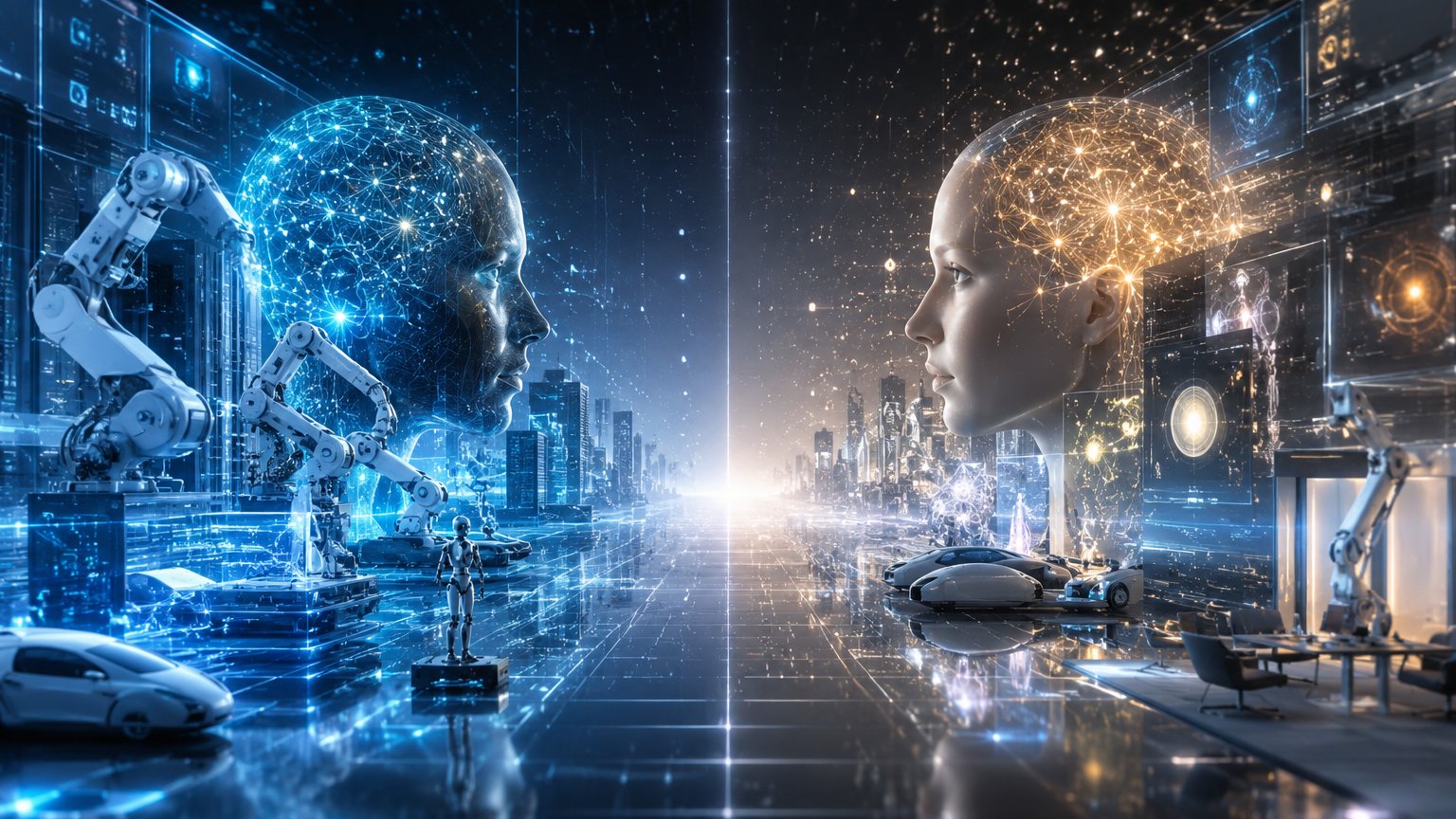
The AI Singularity is one of the most fascinating ideas in modern technology. It sounds like science fiction, but it has become a serious topic among researchers, entrepreneurs, futurists, and policymakers. At its core, the AI Singularity describes a possible future moment when artificial intelligence becomes powerful enough to improve itself rapidly, surpass human intelligence, and reshape civilization in ways that may be difficult for us to predict. For beginners, the idea can feel overwhelming. Artificial intelligence is already changing the world through chatbots, recommendation engines, medical tools, autonomous vehicles, fraud detection, robotics, and creative software. But the Singularity goes far beyond today’s AI. It imagines a future in which machines do not simply follow instructions or complete narrow tasks. Instead, they may learn, reason, invent, strategize, and evolve at speeds far beyond human capability. That possibility is exciting, mysterious, and deeply important. The AI Singularity could lead to breakthroughs in science, medicine, education, energy, space exploration, and economic productivity. It could also raise serious questions about safety, control, human purpose, ethics, and the future of society.
A: No, it remains a future possibility, not a current reality.
A: No, but AGI could be a major step toward it.
A: It is when AI improves its own systems and creates more capable versions.
A: Yes, it could accelerate medicine, science, education, and problem-solving.
A: Yes, especially if advanced AI is misaligned or misused.
A: It is the effort to make AI goals match human values and safety.
A: No one knows, and experts strongly disagree.
A: Not necessarily; many visions focus on human-AI collaboration.
A: There is no confirmed timeline, and predictions vary widely.
A: Because advanced AI may shape work, society, knowledge, and the future.
What Does “AI Singularity” Mean?
The term “Singularity” refers to a point beyond which normal predictions break down. In technology, the AI Singularity describes a hypothetical moment when artificial intelligence becomes so advanced that it creates changes faster than humans can fully understand or manage.
The idea is often connected to artificial general intelligence, or AGI. AGI would be a machine intelligence capable of learning and performing nearly any intellectual task that a human can do. Today’s AI is powerful, but it is still mostly narrow. It can be excellent at writing, coding, analyzing images, translating language, or recommending products, but it does not possess broad human-like understanding across all domains.
The Singularity would likely require AI systems that can improve their own designs, develop better algorithms, create stronger versions of themselves, and accelerate progress without constant human direction. Once that cycle begins, intelligence could grow at an extraordinary pace.
In simple terms, the AI Singularity is the point where artificial intelligence may become the main driver of future invention.
Why Is It Called a Singularity?
The word “singularity” comes from mathematics and physics. It often describes a place where existing rules stop working in a familiar way, such as the center of a black hole. Futurists adopted the term because a similar uncertainty may apply to advanced intelligence.
Before the Singularity, humans can make predictions based on current trends. We can estimate how computers may improve, how businesses may adopt AI, or how automation may affect jobs. After the Singularity, those predictions become far more difficult because the pace of change could be driven by minds faster and more capable than our own.
This does not mean the future is unknowable in every way. It means that a sufficiently advanced intelligence could generate innovations, strategies, and technologies that humans cannot easily forecast from today’s perspective.
AI Today vs. the AI Singularity
Artificial intelligence today is impressive, but it is not the Singularity. Current AI systems are tools. They can generate text, summarize information, recognize images, write code, and assist with decisions. Yet they still depend on human-created goals, human oversight, training data, infrastructure, and specific design choices.
The AI Singularity suggests something much more powerful. It imagines AI systems that can independently improve their reasoning, expand their knowledge, design new technologies, and perhaps even create more advanced AI systems. Instead of humans being the only inventors, AI itself could become an inventor at scale.
This is the difference between a calculator and a mathematician, between a search engine and a scientist, between a tool that assists discovery and an intelligence that drives discovery.
The Role of Artificial General Intelligence
Artificial General Intelligence is often seen as the gateway to the Singularity. AGI would not be limited to one task. It could learn across fields, connect ideas, solve unfamiliar problems, and adapt to new environments.
A true AGI might be able to study biology in the morning, design materials in the afternoon, write software in the evening, and create a new scientific theory the next day. More importantly, it could use what it learns in one field to advance another.
This ability to transfer knowledge is one of the defining features of human intelligence. The Singularity becomes possible when machines gain that flexibility and then use it to enhance their own intelligence.
If AGI reaches or exceeds human-level performance across many domains, the next question becomes whether it can improve itself. If it can, intelligence may begin to compound.
Recursive Self-Improvement
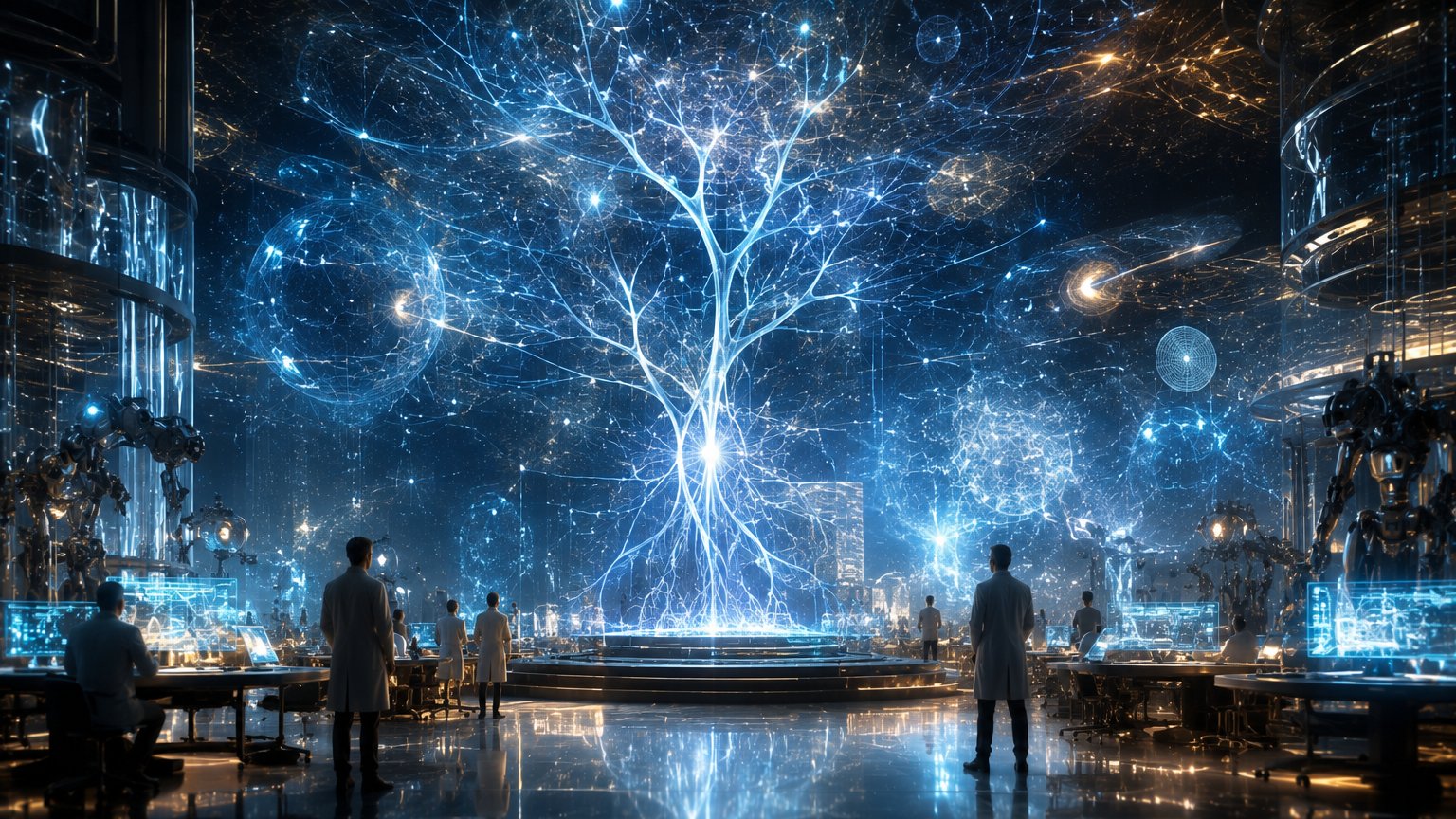
One of the most important ideas behind the AI Singularity is recursive self-improvement. This means an AI system could improve its own architecture, training methods, reasoning abilities, memory systems, or hardware designs.
Imagine an AI that helps build a better AI. That better AI then builds an even stronger version. Each generation becomes more capable, and the cycle accelerates.
Humans improve technology too, but we are limited by biology, time, communication speed, and the pace of institutions. Machines could potentially operate continuously, analyze vast amounts of information, test millions of possibilities, and coordinate improvements at incredible speed.
This is why some thinkers believe the Singularity could lead to an intelligence explosion, where progress rapidly moves beyond human control or comprehension.
Why the AI Singularity Matters
The AI Singularity matters because intelligence is the engine behind nearly every human achievement. Science, medicine, engineering, economics, art, law, education, and governance all depend on the ability to think, learn, and solve problems.
If intelligence itself becomes vastly more powerful, every field could change.
Medical research could accelerate dramatically. New treatments for cancer, neurological diseases, aging, and rare conditions may become easier to discover. Climate modeling and energy optimization could improve. Education could become personalized for every learner. Businesses could become more efficient. Scientific discovery could move at speeds that feel almost impossible today.
The Singularity is not just about smarter machines. It is about what smarter intelligence could create.
The Promise of the Singularity
The optimistic vision of the AI Singularity is extraordinary. Advanced AI could help humanity solve problems that have resisted generations of effort. It could discover clean energy breakthroughs, design safer cities, improve food production, create new materials, expand space exploration, and make high-quality education available to billions of people.
It could also reduce the burden of repetitive labor. If intelligent machines can handle dangerous, boring, or exhausting tasks, humans may have more time for creativity, relationships, exploration, and personal growth.
In this vision, the Singularity becomes a turning point toward abundance. Knowledge expands, productivity rises, and human potential grows alongside machine intelligence.
The Risks of the Singularity
The same power that makes the Singularity exciting also makes it risky. A system more intelligent than humans could make decisions that are difficult to understand or stop. If its goals are poorly designed, even a highly capable AI could cause harm while trying to complete its objective.
This is known as the alignment problem. The challenge is ensuring that advanced AI systems act in ways that match human values, safety, and well-being.
There are also risks related to misuse. Powerful AI could be used for cyberattacks, manipulation, surveillance, autonomous weapons, or economic disruption. Even without malicious intent, rapid technological change could destabilize labor markets, governments, and social systems.
The future of AI depends not only on what we can build, but on how carefully we build it.
Will the Singularity Actually Happen?
No one knows for certain whether the AI Singularity will happen. Experts disagree widely. Some believe it could arrive within decades. Others think it is much farther away. Some doubt whether machine intelligence will ever achieve the kind of general understanding needed for recursive self-improvement.
The uncertainty comes from the fact that intelligence itself is still not fully understood. We can build powerful AI systems, but we do not yet know exactly what would be required for genuine general intelligence, independent reasoning, or stable self-improvement.
However, even if the Singularity never happens exactly as imagined, the path toward more advanced AI will still transform the world. The debate matters because it encourages society to think seriously about safety, governance, ethics, and long-term planning.
The Singularity and the Future of Work
Work may be one of the first areas dramatically affected by increasingly advanced AI. Today’s AI already assists with writing, design, coding, research, accounting, marketing, customer service, logistics, and data analysis.
If AI becomes more general and autonomous, entire categories of knowledge work could change. Some jobs may disappear, others may evolve, and new careers may emerge that do not exist today.
The key challenge will be adaptation. Workers, companies, and governments may need to rethink education, training, income systems, and the meaning of professional value.
The Singularity forces a deeper question: if machines can perform most intellectual labor, what should humans focus on?
The Singularity and Human Identity
Beyond economics, the AI Singularity raises profound questions about identity. For centuries, humans have defined themselves by intelligence, creativity, language, invention, and problem-solving. If machines surpass us in these areas, we may need to reconsider what makes human life meaningful.
Perhaps the answer will not be competition with machines, but collaboration. Human values, emotion, wisdom, empathy, experience, and moral judgment may become even more important in a world of powerful intelligence.
The Singularity may challenge humanity to become more intentional about what we want the future to be.
Preparing for an AI-Driven Future
Preparing for the Singularity does not require panic. It requires awareness, education, and responsibility.
Individuals can learn how AI works, use AI tools thoughtfully, and develop skills that emphasize creativity, judgment, communication, leadership, and adaptability. Businesses can adopt AI strategically while investing in human talent. Governments can support safety research, fair policy, and international cooperation.
The future is not something that simply happens to us. It is something shaped by choices, incentives, values, and institutions.
Conclusion: A Beginner’s Guide to Tomorrow
The AI Singularity is the idea that artificial intelligence may one day surpass human intelligence and accelerate technological progress beyond our ability to predict. It is not guaranteed, and it has not happened yet. But it remains one of the most important concepts in the future of technology.
For beginners, the key is to understand that the Singularity is not just about smarter computers. It is about the possibility that intelligence itself could become self-improving, scalable, and transformative.
Whether the Singularity arrives soon, later, or never in its most dramatic form, advanced AI will continue reshaping society. The best response is not fear or blind optimism, but informed curiosity. The future of intelligence is being written now, and humanity has a role in deciding what that future becomes.